
Home / Remodeling Guides / Wood Rot Repair
How Much Does Wood Rot Repair Cost in Gainesville, GA?
Costs for repairing rotten fascia, trim, siding, door frames, porch columns and floors, deck framing, sill plates and subfloors, plus what causes rot and how to keep it from coming back, for homeowners in Gainesville, Hall County and around Lake Lanier.
Quick answer: Around Gainesville and Hall County, small wood rot repairs like a section of fascia or a window sill typically cost about $200 to $2,000. Rotten siding and trim across a wall runs about $500 to $5,000, a rotten door frame and threshold about $800 to $3,000, and structural rot in a sill plate, rim joist or porch beam about $2,000 to $12,000+. Catching it early is far cheaper than waiting. EBD Construction LLC is a licensed and insured general contractor in Gainesville, Georgia with 15+ years of carpentry and exterior work. Call Eric at 404-925-7481 for a free consultation.
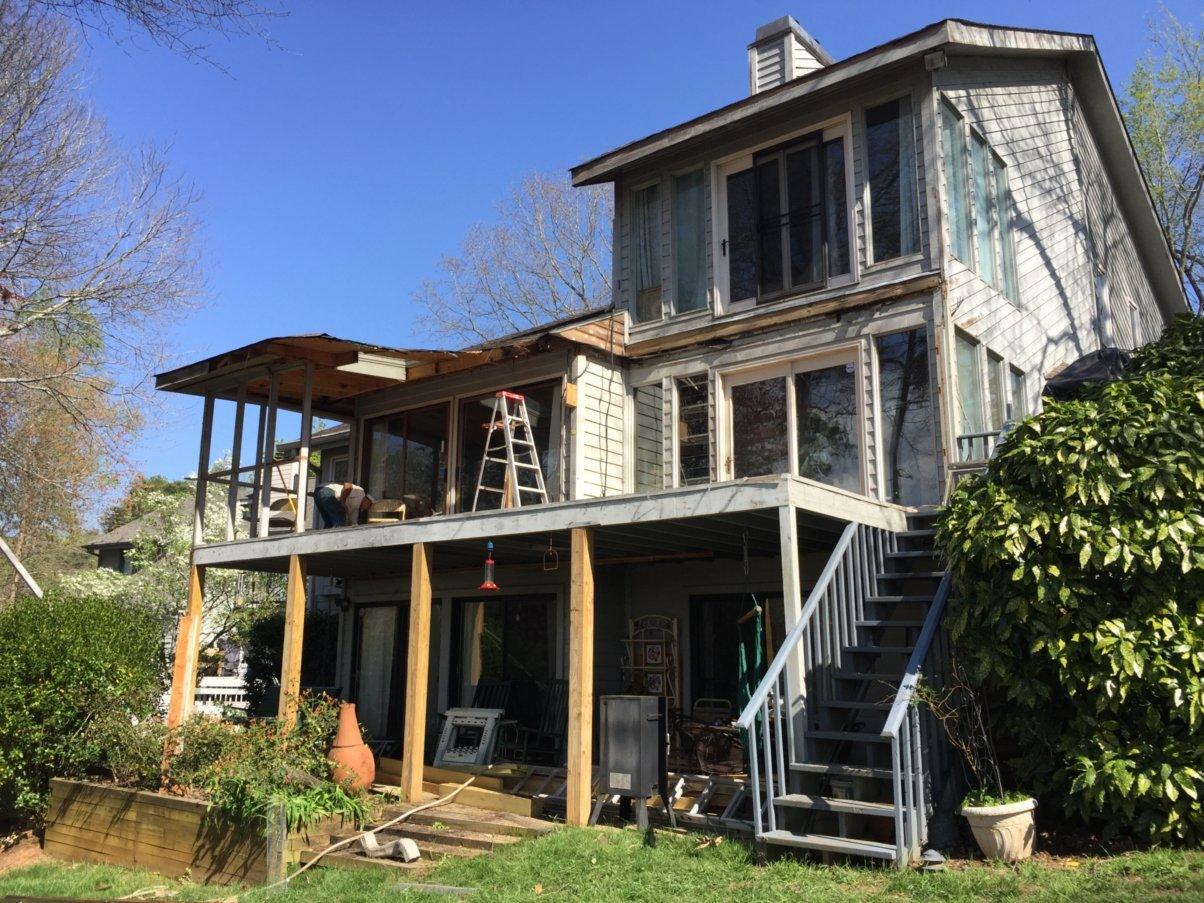
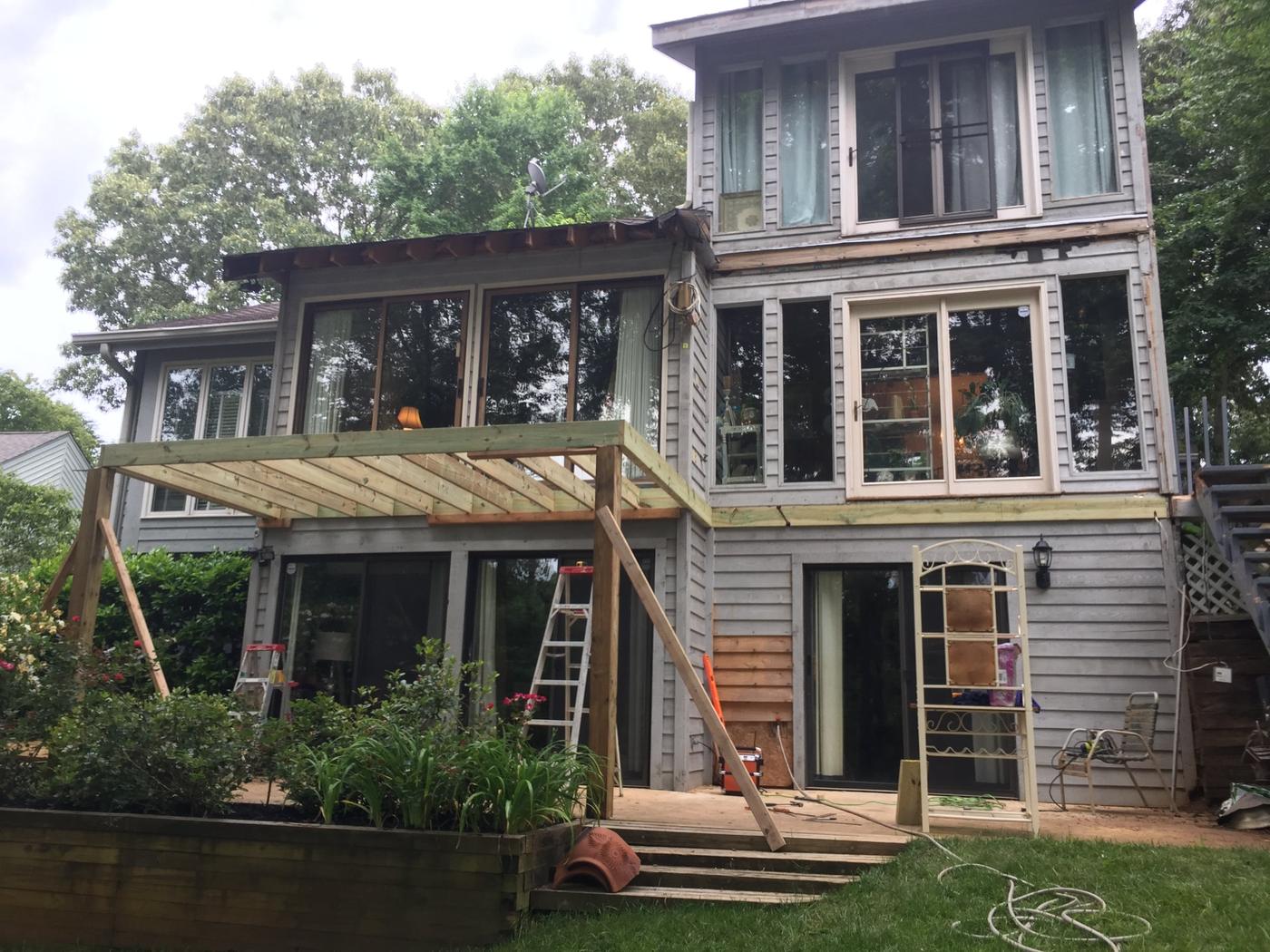
What does wood rot repair cost?
| Repair | Typical cost |
|---|---|
| Small spot rebuilt with wood epoxy | $150–$600 |
| Window sill or trim, per opening | $200–$1,000 |
| Fascia or soffit section | $300–$2,000 |
| Door frame, jamb and threshold | $800–$3,000 |
| Siding boards and corner trim across a wall | $500–$5,000 |
| Porch column, each | $500–$2,000 |
| Porch floor boards | $1,000–$6,000 |
| Porch beam, joists or deck framing | $2,000–$10,000 |
| Rotten subfloor at a toilet, tub or door | $800–$4,000 |
| Sill plate or rim joist (structural) | $2,000–$12,000+ |
These are general ranges for the Gainesville area, not a quote. Prices include cutting out the bad wood, new material, primer and paint on exterior trim. Rot almost always goes further than it looks from the outside, so the real number comes once the bad wood is opened up. Eric shows you what he finds before going further.
How do I know if I have rot?
- The screwdriver test. Push a screwdriver into the wood. If it sinks in or the wood crumbles, it's rotting.
- Paint that keeps peeling in the same spot, especially at the bottom of trim and door frames.
- Dark stains, swelling or gaps where trim meets siding or the roof.
- Soft or bouncy floors near a toilet, tub, dishwasher or exterior door.
- Fungus, mushrooms or a musty smell in a crawl space or behind siding.
- Carpenter bee or woodpecker holes. Woodpeckers often go after wood that's already soft or has insects in it.
- It's on your inspection report. Rot is one of the most common items; see what home inspection repairs cost.
Where does rot show up on Gainesville homes?
- Fascia and rafter tails behind clogged or overflowing gutters.
- Where a roof meets a wall without kick-out flashing, a very common spot on 1980s to 2000s homes.
- Window sills and the bottom of door frames, where water sits on flat surfaces.
- Porch columns, floors and steps, especially on shady lots near Lake Lanier that stay damp.
- Deck ledger boards and joists without flashing. See our deck repair or replace guide.
- Sill plates and rim joists in damp crawl spaces or where soil is piled against the siding.
Repair or replace?
A shallow soft spot on trim can be dug out and rebuilt with two-part wood epoxy, then primed and painted. Anything soft through the board, structural, or bigger than a few inches should be cut out and replaced. For exterior trim we often replace rotten wood with PVC or composite trim, which can't rot, or with primed, treated or fiber cement material. When rot is widespread across the house, new siding can be the better investment; see our siding and exterior remodeling guide.
How do I keep rot from coming back?
- Fix the water first. Clean or add gutters and downspout extensions, and add kick-out flashing where roofs meet walls.
- Keep wood off the ground and roof. Siding and trim should sit 6 to 8 inches above soil and 1 to 2 inches above a roof.
- Caulk and paint. Repaint exterior wood about every 7 to 10 years and re-caulk joints as they open up.
- Aim sprinklers away from the house and keep shrubs trimmed back so walls can dry.
- Use rot-proof materials on the spots that keep failing, like PVC trim at door frames and window sills.
- Keep the crawl space dry with a vapor barrier and working vents or encapsulation.
Is it rot or termites?
Rot is soft and spongy, often darker, and cracks across the grain. Termite damage has tunnels that follow the grain, often packed with dirt, and termites leave mud tubes on the foundation. If you see mud tubes, call a pest control company first, then we can repair the damaged wood.
Does insurance pay for rot?
Usually not. Most homeowners policies exclude rot from slow, long-term moisture or lack of maintenance. Rot caused by a sudden covered event, like a burst pipe or a storm that opens the roof, may be covered. Check your policy or ask your agent. For damage from a leak, see our roof replacement guide and what water damage repair costs.
Where does EBD Construction work?
- Gainesville
- Flowery Branch
- Oakwood
- Buford
- Braselton
- Chestnut Mountain
- Murrayville
- Lake Lanier homes
- All of Hall County
- Towns north of Gainesville
Why hire EBD Construction?
- Carpenters first. 15+ years of framing, trim, siding and porch work, licensed and insured, all work guaranteed.
- We fix the cause. Gutters, flashing and grading get handled so the rot doesn't come right back.
- No surprises. If we open up more rot than expected, Eric shows you before going further.
- You talk to the owner. Eric Bubniak is your point of contact from the first visit to the final walkthrough.
- The same crew every time. Three full-time builders who have worked together for over a decade, with 5-star reviews on Thumbtack.
Wood rot repair FAQs
How do I know if wood is rotten?
Press a screwdriver into the wood. If it sinks in easily, feels spongy or the wood crumbles, it's rotting. Other signs are paint that keeps peeling in the same spot, dark stains, gaps where trim meets siding, mushrooms or fungus, and carpenter bee or woodpecker holes.
Can rotten wood be repaired or does it have to be replaced?
Small, shallow spots on trim can be dug out and rebuilt with wood epoxy for about $150 to $600. Anything that's soft through the board, structural, or larger than a few inches should be cut out and replaced with new wood or PVC trim, and the water source fixed.
What causes wood rot on houses in Georgia?
Water that keeps getting in and can't dry out. In North Georgia the usual causes are clogged or missing gutters, missing kick-out flashing where a roof meets a wall, siding or trim too close to the ground or roof, failed caulk and paint, sprinklers hitting the house, and leaks at windows, doors and toilets.
Is wood rot covered by homeowners insurance?
Usually not. Most policies exclude rot from slow, long-term moisture or lack of maintenance. Rot caused by a sudden covered event, like a burst pipe, may be covered. Check your policy or ask your agent.
Is it rot or termites?
Rot is soft and spongy and often darker, with cracks across the grain. Termite damage has tunnels or galleries that follow the grain, often packed with dirt, and mud tubes on the foundation. If you see mud tubes, call a pest control company before the repair.
How long does wood rot repair take?
Most trim, fascia and door repairs take one to three days, including primer and paint. Structural repairs to a sill plate, rim joist or porch framing usually take three days to two weeks.
Is EBD Construction licensed and insured?
Yes. EBD Construction LLC is licensed and insured, all work is guaranteed, and references are available on request.
Ready to fix the rot?
Call Eric Bubniak at 404-925-7481 or fill out the form below. Tell us where you're seeing soft wood, and we'll set up a free consultation and a written estimate.
Get your free consultation
Tell us a little about your project. Eric will call you within one business day to talk it through and set up a time to see the space.