Home / Remodeling Guides / Aging in Place
Aging-in-Place Remodeling in Gainesville, GA
Walk-in showers, grab bars, wider doors, ramps and main-floor bedrooms for homes in Gainesville, Flowery Branch, Oakwood, Lake Lanier and across Hall County.
Quick answer: Aging-in-place remodeling in Gainesville and Hall County can start small: grab bars and handrails run about $200 to $1,500, and replacing a tub with a walk-in shower typically costs $3,000 to $18,000. Wider doorways run about $800 to $4,000 each, a ramp $2,000 to $12,000, a fully accessible bathroom $8,000 to $35,000 and a first-floor primary suite $30,000 or more. Most single-room projects take 1 to 4 weeks. EBD Construction LLC, a licensed and insured general contractor based in Gainesville, Georgia, does this work with its own crew, and owner Eric Bubniak pulls all permits himself. Call 404-925-7481 for a free consultation.
Who does aging-in-place remodeling in Gainesville, GA?
EBD Construction LLC makes homes safer and easier to live in across Gainesville, Flowery Branch, Oakwood, Buford, Murrayville and the Lake Lanier area. The same three-person crew handles the framing, tile, doors, trim and carpentry, and Eric coordinates the plumbing and electrical work and inspections. We work with homeowners planning ahead for retirement, families bringing a parent home, and people recovering from surgery who need changes fast.
How much does aging-in-place remodeling cost in Gainesville, GA?
Cost depends mostly on whether plumbing or walls have to move. Grab bars and railings are quick. Showers, doorways and new rooms take more. Here's a general guide for the Gainesville area. It isn't a quote.
| Project | What it usually involves | Typical range |
|---|---|---|
| Grab bars and handrails | Bars at the toilet and shower blocked into the framing, rails on both sides of stairs | $200 to $1,500 |
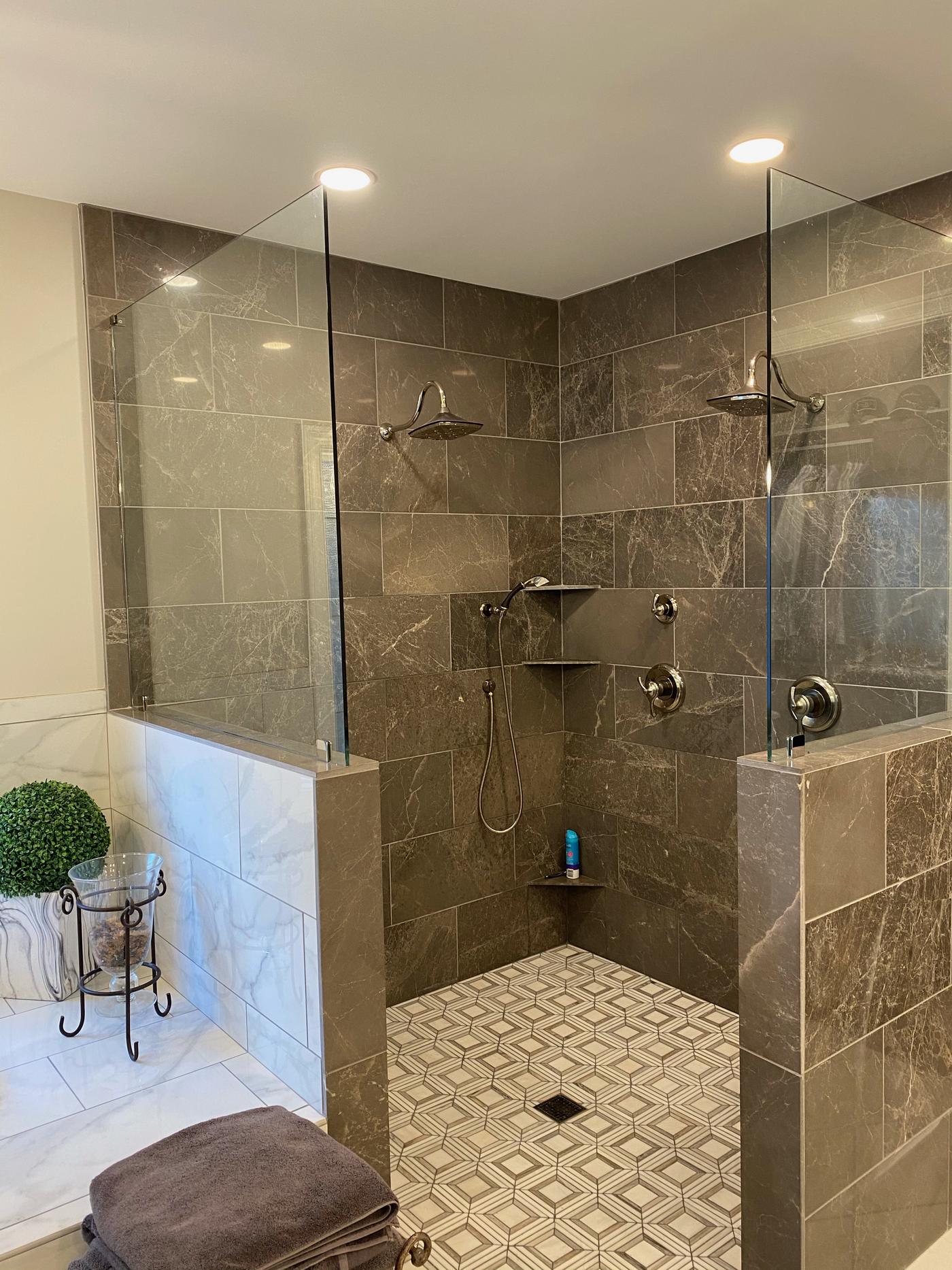
| Tub to walk-in shower | Remove the tub, low or no curb, bench, handheld sprayer, slip-resistant tile | $3,000 to $18,000 |
| Widen a doorway | New 36-inch door, header, trim and patching; more in a load-bearing wall | $800 to $4,000 per door |
| Ramp or zero-step entry | Wood ramp with rails, or regrading and a landing at an existing door | $2,000 to $12,000 |
| Accessible bathroom | Curbless shower, comfort-height toilet, wider door, open vanity, new lighting | $8,000 to $35,000 |
| Whole-home safety package | Several of the above, plus lever handles, lighting and flooring | $10,000 to $60,000 |
| First-floor primary suite | Converted room or addition with bedroom, accessible bath and closet | $30,000+ |
Tip: If you're remodeling a bathroom anyway, ask for wood blocking behind the walls around the toilet and shower. It costs very little during the remodel and lets you add grab bars anywhere later.
What are the most important aging-in-place upgrades?
Most falls at home happen in the bathroom and on stairs, so start there. In order of impact:
- A walk-in or curbless shower with a built-in bench and a handheld sprayer.
- Grab bars at the toilet, in the shower and by the tub, anchored to framing, not drywall anchors.
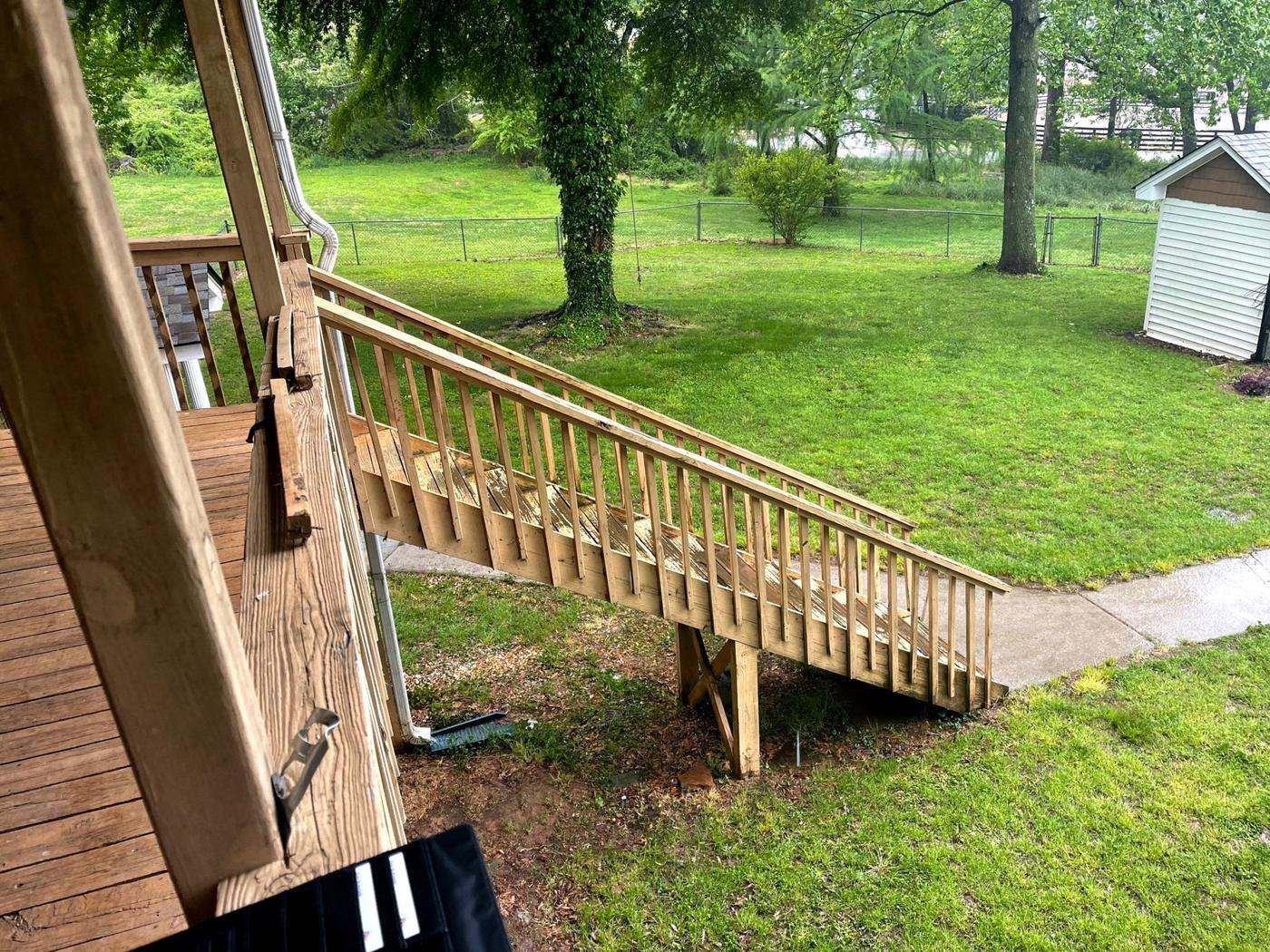
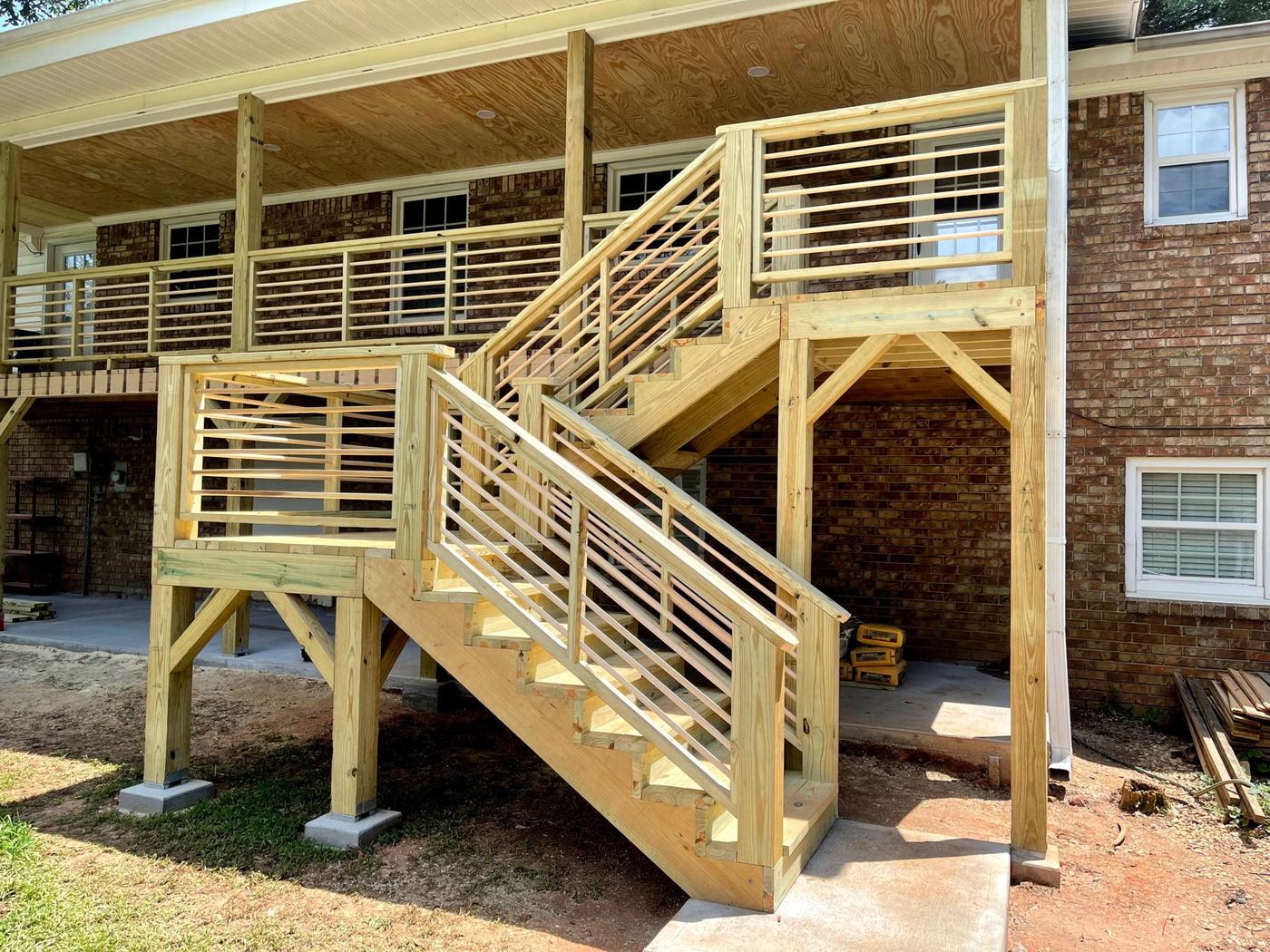
- Handrails on both sides of every staircase, inside and out, including deck and porch steps.
- Better lighting in halls, stairs and bathrooms, with switches at both ends and night lighting.
- Slip-resistant flooring such as textured tile or luxury vinyl plank, and no loose rugs or thresholds.
- Wider doors and lever handles so a walker or wheelchair fits and doors open with a closed fist.
- A zero-step entry from the garage, driveway or back deck.
- A bedroom and full bath on the main floor, so stairs become optional.
How wide should doorways be for a wheelchair or walker?
Plan for a 36-inch door, which gives about 32 inches of clear opening, the width accessibility guidelines use for a wheelchair. Many older Gainesville homes have 28- to 30-inch bedroom and bathroom doors. Widening one means a new header, frame and trim. If the wall is load-bearing, Eric sizes the header and pulls a permit. Where there isn't room to swing a door, a pocket door or sliding barn door opens the full width without blocking the hall. A wheelchair also needs about a 5-foot circle to turn around in a bathroom.
Should I add a first-floor bedroom or move?
If the house is paid for, close to family and the main floor works except for the bedroom, adding a main-floor suite usually costs less than selling, paying Realtor commissions and moving. Options include converting a den or dining room (often the least expensive), finishing a walk-out basement with its own entrance, converting the garage, or building an addition. See the home additions guide, the garage conversion guide and whether to remodel, add on or build new.
Do I need a permit for aging-in-place remodeling in Hall County?
It depends on the work. Grab bars, lever handles and light fixtures usually don't need one. Moving plumbing for a new shower, widening a doorway in a load-bearing wall, building a ramp or deck, and adding a room do. Homes in Gainesville city limits are permitted through the City of Gainesville and homes in unincorporated Hall County through Hall County. EBD Construction pulls all required permits itself.
Does insurance or Medicare pay for home modifications?
Usually not. Original Medicare generally does not pay for grab bars, showers or ramps, though some Medicare Advantage plans offer limited safety benefits. Other places to look:
- Taxes. The IRS lets you count changes made mainly for medical care (ramps, widened doors, grab bars, lowered cabinets) as a medical expense if you itemize. Ask your tax preparer.
- Veterans. The VA offers home modification grants, such as HISA and SAH grants, for eligible veterans.
- Local help. The Legacy Link Area Agency on Aging serves Hall County and the surrounding North Georgia counties and can point you to programs.
How long does an aging-in-place remodel take?
Grab bars and railings take a day or two. A tub-to-shower conversion usually takes 1 to 2 weeks, a full accessible bathroom 2 to 4 weeks, and a first-floor suite 6 to 14 weeks once permits are issued. When someone is coming home from the hospital, tell Eric the date; the small safety work can often be done first while the bigger projects are planned.
- Free consultation. Eric walks the house with you, ideally with the person who'll live there, and notes trip hazards, tight doors and stairs.
- Plan and estimate. You get a written estimate with the must-dos first and the nice-to-haves after.
- Permits. Eric pulls them where needed.
- Build. Demolition, framing and plumbing, then tile, doors, rails and trim.
- Walkthrough. We test every grab bar, rail and door with you before we leave.
Where does EBD Construction do aging-in-place remodeling?
- Gainesville
- Flowery Branch
- Oakwood
- Buford
- Braselton
- Murrayville
- Clermont
- Lake Lanier homes
- All of Hall County
Why hire EBD Construction for aging-in-place work?
- The same crew every day. Three full-time builders who have worked together for over a decade, not a rotating cast of subcontractors.
- You talk to the owner. Eric Bubniak is your point of contact from the first visit to the final walkthrough.
- Permits handled for you. Eric pulls every permit himself and schedules the inspections.
- Reviews you can check. EBD Construction has 5-star reviews on Thumbtack, and references from past customers are available on request.
- See the work first. Browse the project gallery or walk through a real EBD whole-home project.
Aging-in-place remodeling FAQs
What is a curbless shower?
A shower with no step or curb to climb over. The floor slopes gently to the drain so a wheelchair or walker can roll straight in. It usually requires lowering the subfloor, which a contractor plans during the remodel.
Will grab bars make my bathroom look like a hospital?
No. Grab bars come in brushed nickel, matte black and brass finishes to match your fixtures, and some double as towel bars or toilet paper holders.
What height should a toilet be for seniors?
A comfort-height or "right height" toilet sits about 17 to 19 inches high, a few inches taller than a standard toilet, which makes sitting and standing easier.
Can you add a stair railing to both sides?
Yes. A second handrail is one of the least expensive and most effective safety upgrades. EBD builds rails for interior stairs, porches and decks.
Do you build wheelchair ramps?
Yes. EBD builds wood ramps with handrails and landings, and where the grade allows, a gently sloped walkway to a zero-step door. A common ramp slope is 1 inch of rise per foot of length.
Is EBD Construction licensed and insured?
Yes. EBD Construction LLC is licensed and insured, all work is guaranteed, and references are available on request.
Ready to make your home easier to live in?
Call Eric Bubniak at 404-925-7481 or fill out the form below for a free consultation. Tell us who'll be living in the home and what's hardest about it today, and we'll start there.
Get your free consultation
Tell us a little about your project. Eric will call you within one business day to talk it through and set up a time to see the space.